America Votes: Control of Congress Hangs in the Balance on Midterm Election Day
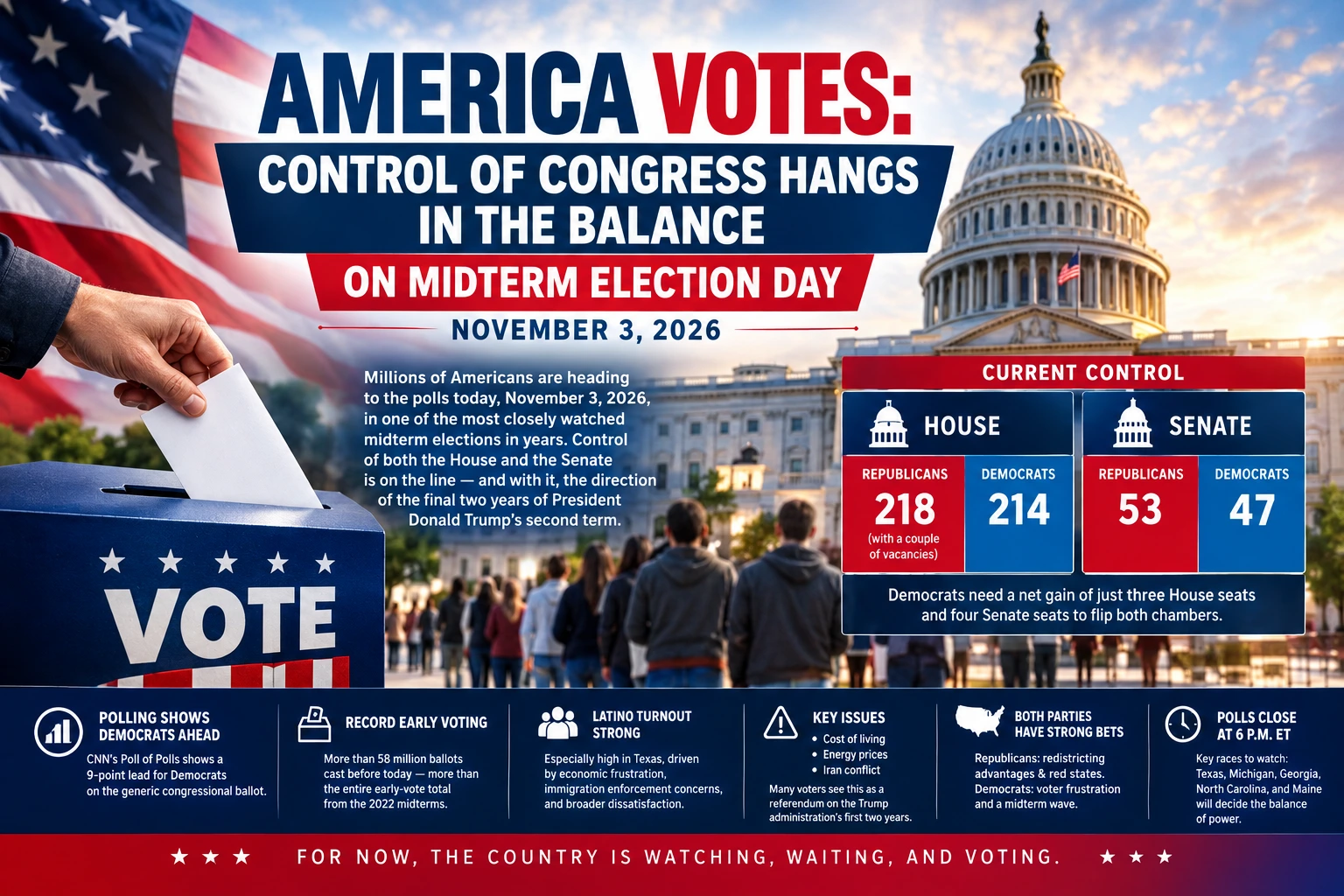
WASHINGTON, November 3, 2026: Millions of Americans are heading to the polls on Tuesday in a closely watched midterm election that could reshape the balance of power in Congress and influence the final two years of President Donald Trump’s second term.
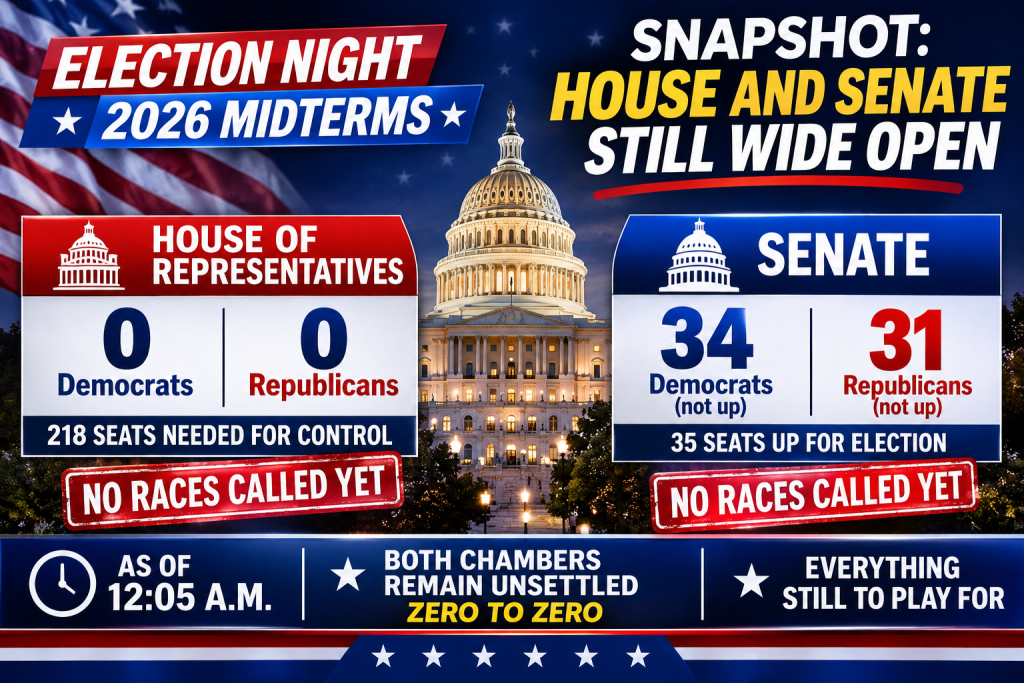
All 435 seats in the House of Representatives and 35 seats in the Senate are being contested. Republicans currently hold narrow majorities in both chambers, making the outcome of several competitive races crucial to determining which party will control Congress.
The Republican Party holds a 53–47 advantage in the Senate, while its House majority is also narrow. Democrats need a net gain of three seats to take control of the House and four seats to secure a Senate majority. <Cite refs=
Polls Point to Democratic Advantage in House Race
Pre-election polling has indicated a national advantage for Democrats on the generic congressional ballot. CNN’s Poll of Polls, based on surveys conducted through October 27, showed Democrats leading Republicans by nine percentage points, at 52% to 43%.
However, national polling does not determine the outcome of individual congressional races, and close contests could still produce different results.
Political analysts have generally viewed the House as more favorable territory for Democrats, while control of the Senate remains uncertain. Competitive Senate contests are drawing particular attention in states including Texas, Michigan, Alaska, Maine and others. Early Voting and Key Issues Shape Election Day
The election follows a substantial early-voting period, with participation attracting close attention from election observers. Early-voting figures can offer insight into turnout patterns, but they do not reveal how individual ballots were cast or establish which party is winning.
The cost of living, energy prices, immigration enforcement and the conflict involving Iran have featured prominently in the campaign. The election is widely being viewed as a public assessment of the Trump administration’s performance during its first two years back in office.
Republicans and Democrats Compete for Congressional Control
Republicans are seeking to retain their congressional majorities by relying on their established support in conservative states and the advantages they believe their electoral map provides.
Democrats, meanwhile, are hoping that voter dissatisfaction over economic conditions and the administration’s policies will translate into gains in competitive districts and Senate contests.
A change in control of either chamber would have significant consequences for the administration’s legislative agenda, congressional investigations, government appointments and oversight.
Results Expected After Polls Close
Polling places are scheduled to begin closing at 6 p.m. Eastern Time, although closing times vary by state. Results from competitive House districts and pivotal Senate contests will help determine whether Republicans retain control or Democrats take over one or both chambers.
However, the final balance of power may not become clear on election night. Close contests, mail ballots and state-specific counting procedures could delay the announcement of winners.
For now, Americans are casting their ballots in an election that could shape the direction of the country’s political landscape and the remainder of President Trump’s term.